Ajna Chakra, the one opening that everyone strives for. It has been a long way from Mooladhara, and a long time since, but such is the flow of time.
So, what is Ajna, and what makes it so special that I have to come out of my self imposed isolation, you ask?
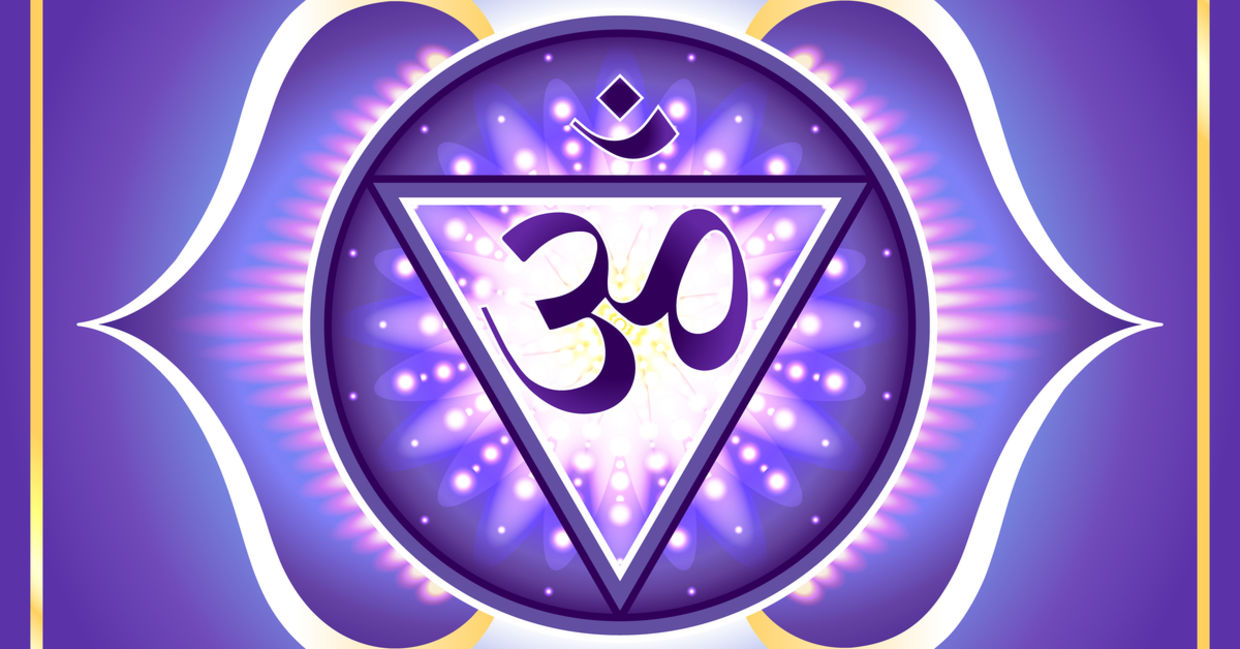
The Third-Eye Chakra, or Ajna Chakra in Sanskrit, is the sixth of the seven primary chakras in the body. Commonly referred to as the perception center, Ajna is believed to be the seat of the soul and the gateway to higher consciousness. In the Hindu system of Kundalini or prana tradition, Ajna chakra, embodies the power of the unconscious mind, and is considered a direct pathway to the ultimate reality.
Many ancient civilizations reference the third eye. The third eye, the Eye Of Horus was an important symbol in Egyptian religion. It was designated as a emblem of protection prosperity of power.
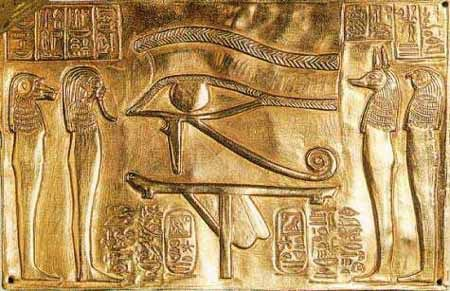
The Eye of Horus, as well as the Sixth Chakra is also associated with the Sun, and its light, which represents clarity, understanding, and spiritual insight. As a result, it is key to gaining higher consciousness and forms the focal point of concentration during asana or meditation practices.
In the physical body, the Ajna Chakra corresponds with the hypothalamus, the pituitary gland, and the pineal gland, as well as the eyes, ears, and the nose.
It is said to be the portal to the paranormal, the occult, and the spiritual.
Ajna is symbolised by the colors white, golden, or indigo or violet, each of them the color of the spirit, and the spiritual. White symbolises purity, golden is the color of Gods, and indigo is the color representing the energy of change. The symbol of Ajna is a two petalled lotus which represents Shiva & Shakti, also known as Purusha and Prakriti in the samkhya tradition, these being the primordial individually inert and passive energies of masculine and feminine that combine to create a dynamic life force that becomes the cause and the basis for evolution. Since the chakra is associated with the brain, the two petals are also said to represent the two hemisphere of the brain. In Jungian terms, the two petals symbolise the dualities inherent in the God and the Self. The lotus which shines white like a beautiful moon, represents your inner consciousness and its ability to surpass these dualities.
The two petals of the lotus are also said to correspond to two sound syllables ham and kSham. During deep meditation, these two sounds reverberate in heightened consciousness to allow the mind into increased concentration and focus. Concentration perhaps is the wrong word to use. To the uninitiated, it may imply a struggle when really, the opening is anything but a struggle. It is a consequence of letting go, and the overcoming of desires and attachments, even the attachment or the desire for the third eye opening.
The element related to the sixth energy center is called Avyakata, which means “cannot be described because it is formless.” Since light represents clarity, understanding, and spiritual insight, some associate light with this element.
The name – third eye chakra – is a natural consequence of its location, for the chakra is located at the center of the eyebrows, in the middle of the forehead, exactly where Shiva’s third eye is located. The opening of this chakra signifies the higher state of perception where knowledge about higher self and all-pervading consciousness of the universe, Brahman, is absolute.
Ajna’s exceptional fame comes from the stories about the mystical and out of body experiences, the acquired ability to look into the past and the future, and other occult powers that accompany the energy activation that accompanies the opening of the Ajna Chakra.
The Goddess residing here is Hakini, a beneficent six headed godess as pure and white as the moonlight, reposed on a two-petaled lotus flower also symbolic of the two hemispheres of the brain. Hakini represents imagination, clairvoyance, intuition and inner knowing. The goddess adopts the Vidya mudra, the hand gesture of knowledge.
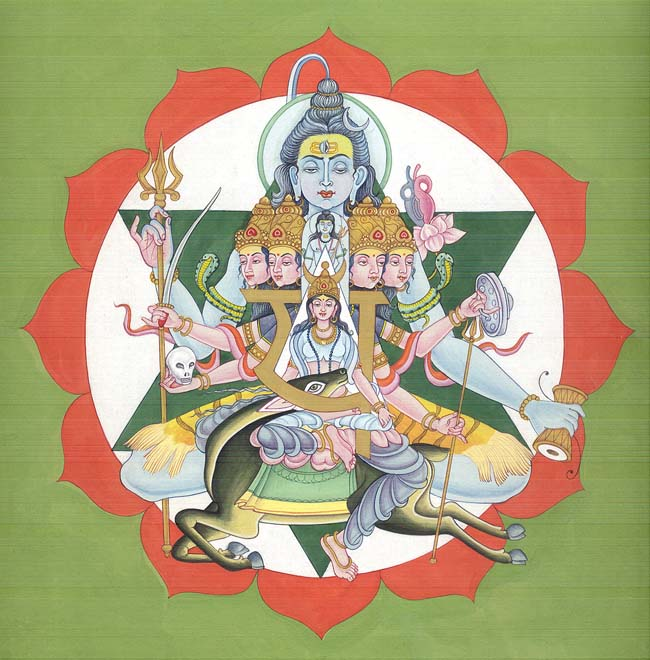
Hakini mudra is a sacred hand gesture or “seal,” used during yoga and meditation practice as a means of channeling the flow of vital life force energy known as prana. In Sanskrit, Hakini means “power” or “rule,” and the Hakini Mudra is believed to give the practitioner power over their own mind. Practicing Hakini mudra is believed to invoke the energy of Goddess Hakini, as a means of stimulating and opening the third-eye chakra.
Hakini mudra is said to be useful in countering stress, fatigue and anxiety, boosting memory, Increasing concentration, energizing the brain, promoting a calm mind, enhancing clarity and an increase in creative abilities.

Biologically speaking, Ajna is associated with the endocroneal pituitary gland, located at the base of the brain, below the hypothalamus. It is at the level of the eyebrow and it is in the space between them. behind your skull and within this area is where the pineal glad is located. It is located in the midline of the brain beneath the backpart of the Corpus collosum and is spiritual mysticism it is connected to the third eye energy centre behind the eyebrows.
The pituitary gland has two lobes: the anterior and posterior lobes. The anterior lobe produces hormones that control growth, metabolism, and reproduction, as well as regulating other vital glands such as the thyroid and adrenal glands. The posterior lobe stores and releases two important hormones: oxytocin and vasopressin. Oxytocin, also called the love hormone, is released during social bonding activities like hugging. Vasopressin helps regulate water balance and blood pressure.
This is the energy centre associated with our abilities to perceive things that go well beyond our five basic physical senses.
It is referred as a third eye because it has rod and cones that resemble the retina of the eye when it is dissected. The peneal glad even has retinal tissue in it s well as the same wiring as to the brains wiring to the visual cortex. And interestingly enough the cell in the pineal glands are called pinealicites . These cell synthesise melatonin that hormones that control our circadian rhythms, sleep wake cycles and our biological clock.
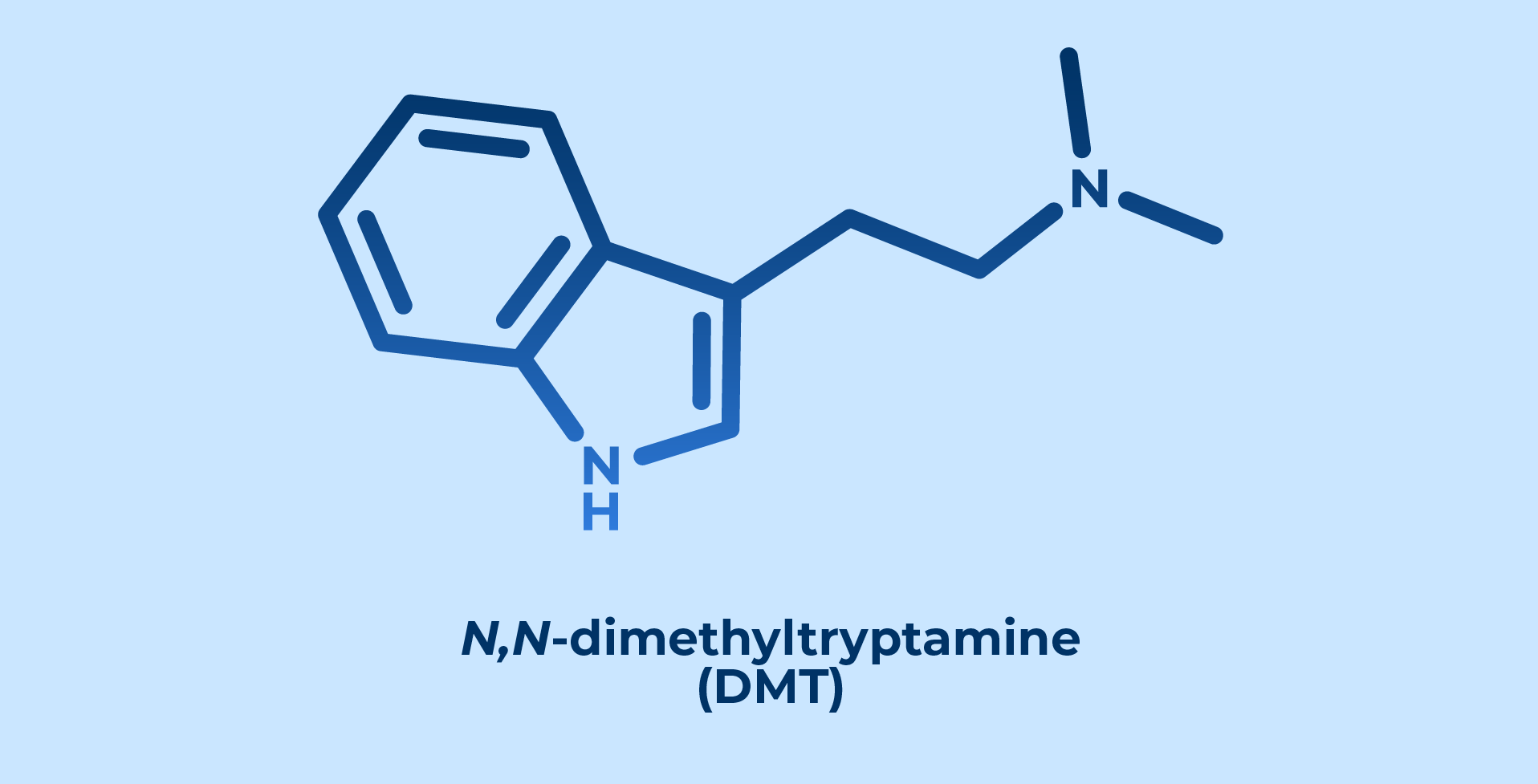
It is designated as the Eye of the God because of a carbon compound called dimethyltriptamine or DMT, which is a naturally occurring psychedelic compound found in trace amounts in the body, and more specifically present in and released from the pineal gland. DMT is also found in small amount in the lungs and is a hallucinogenic compound that can induce intense visionary experiences. DMT plays a role in dreaming, creativity, imagination and states of intense meditation. Some say that it is released in high quantities during birth to help the infant transition more easily. DMT may also be released during death, and it is said that the intense worldly experiences that are reported by those who return from the dead, the near death experiences, are associated with DMT. This hypothesis suggests that the mystical near death experiences are simple hallucinations. In meditation, the release of DMT leads to a sense of overwhelming bliss, rapture, happiness and a general sense of overall well being.
In most people the pineal gland is lying dormant. However it can be intentionally aroused, awakened and unlocked to tap into its vast powerhouse and unlimited ability that is stored within each individual consciousness and spiritual being.
The reductionists suggest that the ancient techniques for opening the third eye are simply DMT boosters. They stimulate the pineal glad into producing more of the hallucinogenic substance, which enables the meditator to perceive creatively and see things that would not be possible by the normal eye.
When the Ajna Chakra opens and is well balanced, it may induce an all pervading sense of wellness, almost an uncomfortable level of orgasmic bliss,. This balance can improve physical health, mental clarity, and emotional well-being.
If you google “Signs of Ajna Chakra Opening”, you will see millions of sights on the subject. I dont wish to diss such websites, except that chakra openings are very personal and individual processes, which take a leaf from your background and your samskaras. There is not one size fits all. And no one can help you open your chakra in an hour, a day, or even a week. It takes quite a while – weeks, months, years, or may even be a few lifetimes depending upon your dedication, the time spent on meditating, the meditative technique, and the quality of meditation. Once the third eye begins to open, the reality begins to bend in your favor and you begin to have a direct access to the universe. Hence, it is important to have the right intent, and right concentration. It is also important to approach the practice with respect, discipline and caution.
A lot of people believe, and I used to believe too, that opening the chakra is a step towards becoming a more spiritual being, getting closer to Shiva. I now find that this is not really true. The intent guides spirituality, not the practice of meditation. On its own, the opening the chakras is a simple exercise of focussing the mind. If you focus, you will get certain results. If you focus well enough, the results will be better. And as the reductionists say, someday the pituitary gland may be medically stimulated into increasing its secretions. Hence, the increased awareness, heightened consciousness, and perhaps even the occult powers have nothing to do with spirituality, just like religion has nothing to do with spirituality. Thugs and hoodlums may visit the temples and pay obeisance to their own gods before embarking on a mission to commit a crime. Likewise, obtaining these powers does not automatically being you close to god. In fact, the acquisition and display of such powers is said to be a distraction. Hence, the Buddhist Monks never reveal the powers they have acquired thru their meditation. The siddhis, as the powers are called, are merely seen as a distraction.
With that in mind, I will not dwell on the siddhis, per se, but will merely touch upon the process in a way that enhances one’s spirituality.
The first and foremost sign of the opening of the third eye is the awareness of the distinction between the thinker and the thought, ie the distinction between our body and our awareness if it. You may have read Mark Epstein’s book Thoughts Without A Thinker where he reveals that the thoughts are bodily processes. Just like blood courses through our veins, the thoughts race thru our minds. We neither hear nor think about the blood, and we reach a state of mind where the thinking and the thoughts are perceived as part of bodily processes that do not enter our consciousness.
This experience, of becoming capable of not engaging with the thoughts and viewing them as belonging to the body and becoming disenchanted with the body, is made possible at the onset of the awakening of the Third Chakra.
The meditator experiences consciousness (or bare awareness) as being distinctly separate from the body, On one side he can see his body, with all its bodily processes including but not limited to the thoughts that flow thru the mind, the blood running thru his veins, the synaptic connections transmitting signals etc. He can see his body undergoing changes with time. On the other side, quite separate from the body, he sees the awareness of it. He is aware of the body as a separate entity from his awareness of the body, and his awareness of the awareness itself. The thoughts are seen as being part of the body, but the meditator realises that he is not the body, he is the awareness itself, and the awareness of it. He is a consciousness that is untouched by anything at all, including time, body, and its thoughts.
At this point, consciousness becomes the Master that drives the meditation forward without the five hindrances that the meditator may have previously faced. After this point, random thoughts will not generally enter into the realm of his awareness and meditation proceeds without struggle between the body and mind. The meditator experiences of being pure consciousness bring forth a spurt in the abilities to sit undeterred by the body or thoughts. Thoughts Without A Thinker. There are thoughts now, but there is no one to receive them.
More amazing experiences, too many to detail and most beyond the scope of the blog, follow. There is an experiential understanding of the nature of time, and its relativistic qualities. The meditator feels the body immersed in time and constrained by its limitations. The body can be seen as aging. But although the meditator feels time and its relation with his body, he experiences the consciousness as being independent of time. Consciousness feels ageless, timeless. From this, a meditator will gets a personal experience of having transcended time. He sees that the consciousness, also called Atma, as being beyond time. He now understands what is meant by the sages saying that Atma is never born, nor does it die. One has a profound experiential understanding of things that have been passed on to us by our ancestors thru our scriptures. These are no longer stories, but unforgettable experiences that now are part of our being leading to all pervading feelings of gratitude, compassion and loving kindness.
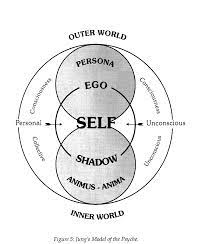
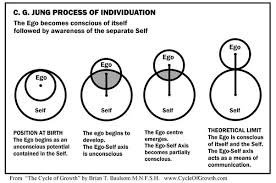
Being a hard core Jungian, I would be remiss if I did not add, however briefly, Jung’s interpretation of the Kundalini process. His model consists of the Higer Self and the inferior Ego. Generally, in an unawakened life, the deluded Ego takes over the role of a Master, managing our day to day activities. The kundalini awakening, especially the awakening of the Ajna Chakra brings the Ego in alignment with the larger and higher self. The Ego becomes subservient to the Self and works at the directions of the Self, allowing for compassion, empathy, gratitude and loving kindness to flow freely. In Jungian Psychology, the process is called Individuation.
Kundalini teachings emerged from Shaivism, a Tantric form of Hinduism. And likewise in Buddhist Tantra, Vajrayana, there is the teachings of Candali, also known as Tummo. They are in essence the same, but the energy is directed differently. Candali is the inner fire, or heat, and it is what keeps yogis warm and able to live naked in the snow of Tibet and dry towels soaked in ice-water by placing them on their bodies – an act that would surely kill an ordinary person.
While Buddhism doesn’t say anything about Kundalini, it is there, nevertheless, having been cloaked in the empowerment rituals and the pointing out of the nature of mind.
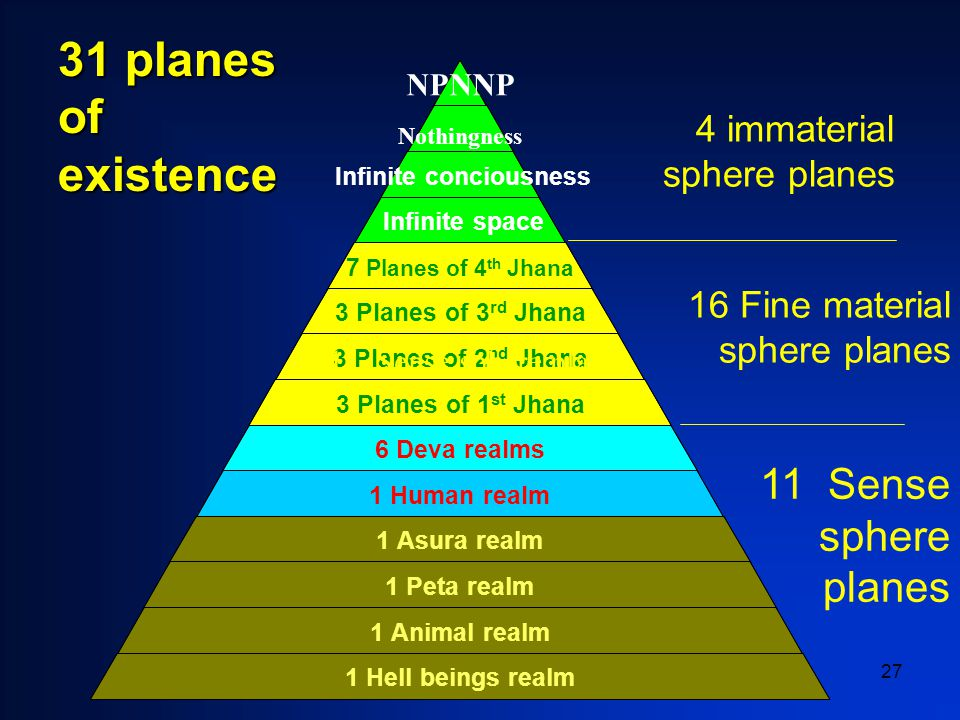
Buddha is known to have reluctantly talked about the States of Mind, also called the Jhanas – the 4 form-related jhanas and 4 formless jhanas,. These follow the success with the Access Meditation. Although the topic is beyond the scope of this blog, but it must be said that once the Ajna Chakra is open, the entry into the much coveted third and fourth jhana will feel like a cakewalk. Although Buddhist teachings do not contain any Kundalini related nomenclature, nevertheless, call a Rose by any name, it would still be a Rose. They have their own language to identify the rise of Kundalini energy, and it must be said that experiencing the realm of the infinite space (Fifth Jhana), and infinite consciousness (Sixth Jhana) and the remaining two Jhanas become a possibility only after the Ajna Chakra is activated. Failure to activate the Ajna would never allow an individual to remain in the thoughtless states required of the Second, and Third Jhanas, such states becoming possible only after the mind has been able to divest itself of the body and its thoughts.
A second sight to see beyond the obvious or the physical plane is one of the main power associated to this energy vortex. As the Kundalini energy flow through this chakra, It brings a heightened state of intuition, cross platform interpretation and deeper understanding of time , space and energy. As the universal truth dawns upon the person, he finds himself in a constant state of everlasting bliss or Ananda.
 Madhu Sameer
Like, Subscribe and leave a Reply