Buddhism And The Insight Practice
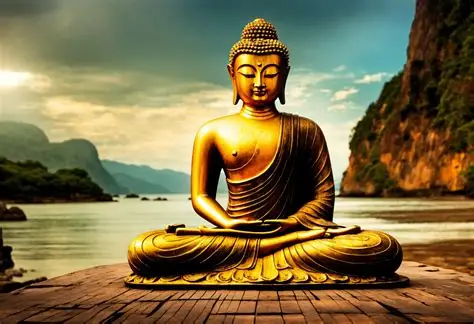
Across the ages, India has been a wellspring of spiritual insight, giving rise to practices that continue to shape lives across the world. Among these, yoga endures as a transformative discipline for understanding the mind and cultivating inner peace. Rooted in rich philosophical traditions, it has transcended its origins to become universally embraced for benefits to body, mind, and spirit.
Comparative Overview: Karma, Bhakti, Raja, Jnana
Ancient teachers recognized that the path to liberation could not be one-size-fits-all: some are moved by faith and love, others by inquiry and reason, others by selfless service, and others by disciplined inner practice. To reflect such diversity of human temperament and inclination. classical Hindu scriptures identify distinct but complementary yogic approaches to make spiritual growth accessible to all. Although diverse in practice, each of these streams ultimately converge in the same ocean of self-realization, elevating the man to his highest potential, and thru such transcendence, merging the creator, the created and the creation itself.
The Bhagavad Gītā, identifies four principal yogic streams : Karma (selfless action), Bhakti (devotion and love for the divine), Rāja (mental discipline and meditation), and Jñāna (knowledge and self-inquiry). Over centuries, additional systems such as Haṭha yoga and Tantra yoga evolved, offering specialized methods for cultivating physical vitality, harnessing subtle energies, or integrating all aspects of human experience. Understanding the defining features of these traditions is essential to discerning where Vipassanā meditation aligns with, diverges from, or complements their respective goals and methods.
Vipassana vs Karma Yoga : Actions vs Insight
Karma yoga is traditionally defined as the path of selfless action—acting without attachment to personal gain, and offering the fruits of one’s actions to the divine, to humanity, or to the greater good. In the Bhagavad Gītā, Krishna describes Karma yoga as working diligently in the world while remaining inwardly detached from success or failure. The essence is action without ego: doing what needs to be done because it is right, not because it benefits the self. A Karma yogi cultivates mindfulness in action, non-attachment by letting go of the outcome, whether favorable or unfavorable, and service as spiritual practice by seeing every act as an offering.
In practice, Karma yoga transforms daily life into a field of meditation. Sweeping a floor, preparing food, or helping a neighbor can become as spiritually potent as sitting in formal meditation—if done with awareness, humility, and surrender.
The meditation most suited for a karma yogi is mindfulness in action (satipaṭṭhāna applied to daily tasks), reflection on impermanence, contemplation on non-attachment. Mindfulness-in-action aligns perfectly with the ethic of liberation through selfless service, without attachment to outcomes. Mindfulness transforms every task into a meditative act. Reflections on impermanence and non-attachment reinforce the mental clarity needed to act without clinging the act, or to its outcome.
Vipassana vs Bhakti : Devotion vs Equanimity
Bhakti Yoga is the path of devotion and love directed toward a personal deity or divine principle often seen as a child, a partner, a parent, or a guru., cultivating a deep emotional connection and surrender. These yogis engage in repetitive chanting (japa), singing hymns, (kirtan), prayer, and rituals. This path aims to dissolve the ego’s barriers by replacing self-centeredness with loving devotion, fostering feelings of joy, grace, and emotional upliftment. Such intense love, or bhakti, conquers all adversity and distress, ultimately leading to transcendence, and consequential merger of the creator, created and the creation.
Psychologically, Bhakti nurtures emotional healing, compassion, and a profound sense of belonging and trust, which can provide solace during suffering or crisis (Flood, 1996; Zaehner, 1966).
The goals of bhakti yoga are best achieved by japa (mantra repetition), loving-kindness meditation (mettā), visualization of the deity or guru since it channels emotion and longing into devotion to the divine. Mantra repetition anchors the heart in sacred sound, mettā aligns with Bhakti’s cultivation of unconditional love, and devotional visualization deepens the personal bond with the object of worship, reinforcing the emotional surrender at the heart of Bhakti practice.
Vipassana vs Raja Yoga : Concentration vs Insight
Rāja yoga, often called the “royal path is best known through Patañjali’s Yoga Sūtras and its Eight Limbs, which include ethical precepts, physical postures (āsana), breath control (prāṇāyāma), sense withdrawal (pratyāhāra), concentration (dhāraṇā), meditation (dhyāna), and absorption (samādhi). It focuses on gaining control over the mind and body to reach deep meditative states. The practice strengthens physical endurance and flexibility, harmonizes the nervous system via controlled breathing, and cultivates unwavering mental focus. The ultimate goal is to transcend ordinary consciousness and experience the unification of the individual self (puruṣa) with universal consciousness, thereby attaining liberation (kaivalya) (Feuerstein, 1996; Bryant, 2009). Again, this strives for a transcendental merger between the creator, created and the creation.
Raja yoga’s goals are best achieved by the use of meditations like dhyāna (one-pointed concentration), Trāṭaka (gazing meditation), mindfulness of breath (ānāpānasati). These directly cultivate sustained focus, while breath mindfulness quiets mental chatter and prepares the mind for deep absorption.
Vipassana and Jnana: Inquiry and Insight
Jñāna yoga is the yoga of knowledge—the yogic path of vichāra—relentless curiosity, and self-inquiry—seeking liberation (mokṣa) through the direct realization of truth. It is considered the most demanding of all yogic paths because it requires not only a sharp, disciplined intellect, but also the courage to dismantle deeply held assumptions about reality and the self. Rooted in the Upaniṣadic tradition, Jñāna yoga proceeds through a process of discrimination (viveka) between the eternal (nitya) and the transient (anitya), recognition of the illusory nature of the ego (ahaṃkāra), and direct contemplation of the Self (ātman) as identical with the Absolute (Brahman). Its goal is not the accumulation of philosophical knowledge, but a profound experiential shift—the dissolution of the separate “I” into pure awareness.
Classical Jñāna yoga unfolds in four stages:
- Śravaṇa — Listening to or studying scriptural truths under guidance, allowing the mind to absorb the great statements (mahāvākyas) such as Tat Tvam Asi (“Thou art That”).
- Manana — Deep reflection to resolve intellectual doubts and integrate the teachings into lived understanding.
- Nididhyāsana — Sustained, non-discursive meditation to directly experience the truth beyond thought.
- Anubhava — Direct realization, where subject and object dissolve into unified awareness.
The meditations aligned with Jñāna yoga are designed to strip away illusion, sharpen discernment, and anchor the mind in reality as it is. They direct attention inward with unwavering precision, cutting through conceptual overlays until only pure awareness remains. Among the most resonant are:
Self-Inquiry (Ātma Vichāra) —Ātma-vichāra, or “self-inquiry,” is a direct path to self-realization, most widely taught in modern times by the sage Ramana Maharshi. Rooted in the jñāna yoga tradition, it centers on the simple yet profound question, “Who am I?” The practitioner, often a dedicated seeker or advanced meditator, turns attention inward to trace the sense of “I” back to its source. By persistently observing the arising of thoughts and identities, and refusing to be carried away by them, the inquiry reveals the pure awareness that underlies all experience. This method bypasses complex ritual or philosophy, relying instead on the steady dissolution of false identification until only the Self remains.
Vipassanā (Insight Meditation)—Particularly in its purest form as taught in the Buddhist satipaṭṭhāna tradition, Vipassanā is the natural counterpart to Jñāna yoga: an unrelenting, moment-to-moment observation of body, feelings, mind, and phenomena to perceive impermanence, suffering, and non-self.
Neti-Neti Meditation—Neti neti—Sanskrit for “not this, not this” is an Upanishadic practice of self-inquiry through negation, central to the path of jñāna yoga. Traditionally taught to dedicated seekers such as sannyāsins, Vedāntins, and advanced meditators, it involves methodically examining every layer of experience—body, senses, thoughts, emotions, roles—and discarding each as “not the Self.” By stripping away all that is transient and conditioned, the practitioner is left with the unchanging, formless awareness that is their true nature, beyond all attributes or limitation..
Contemplation on the Mahāvākyas—Mahāvākya-led inquiry is a contemplative method in the jñāna yoga tradition that uses the “great sayings” of the Upanishads—such as Tat Tvam Asi (“That Thou Art”) or Aham Brahmāsmi (“I am Brahman”)—as focal points for realizing the Self. Traditionally practiced by Vedāntins, renunciates, and advanced meditators under the guidance of a teacher, it invites the seeker to internalize these aphorisms through reflection, meditation, and lived experience. By repeatedly turning the mind toward their meaning, the practitioner dissolves the perceived gap between individual and ultimate reality, awakening to the non-dual truth they express..
Witness Consciousness Meditation (Sākṣī Bhāva)— Witness Consciousness Meditation, or Sākṣī Bhāva, is a contemplative practice found across yogic and Vedāntic traditions, aimed at cultivating the stance of the inner witness—the sākṣī—who observes all phenomena without attachment or aversion. Practitioners, often experienced meditators or students of jñāna yoga, learn to watch sensations, thoughts, and emotions as passing events in the field of awareness, neither identifying with nor suppressing them. Over time, this steady witnessing loosens habitual identification with the body-mind and reveals a stable, silent presence untouched by change. In this way, Sākṣī Bhāva becomes both a method of meditation and a lived perspective, fostering equanimity and clarity in all circumstances.
Each of these meditative practice suit Jñāna yoga because they align perfectly with its aim: liberation through direct recognition of reality, free from distortion. They cultivate a steady, lucid awareness that pierces the veil of avidyā (ignorance). For this reason, many practitioners find Vipassanā to be a seamless bridge between the ancient aims of Jñāna yoga and a contemporary method that delivers its essence: the direct, experiential knowing of what has always been present—the changeless awareness in which all change occurs.
Haṭha yoga is the path of physical and energetic discipline. Ha” means sun, “tha” means moon—symbolizing the balance of opposing energies in the body. It aims to purify, strengthen, and align the body so that energy flows freely. Currently practiced in the West, as a “stretch class”—it is a preparatory discipline—a way to make the body a fit vessel for spiritual awakening.
Hatha yoga focuses on physical practices, primarily postures (āsanas), breath control (prāṇāyāma), and cleansing techniques. The goal is to stabilize the body, calm the breath, and steady the mind, making longer, more focused meditation possible.
Since Haṭha yoga prepares the body and prāṇic system for higher states of consciousness, the meditations most suitable for these goals are Kundalini meditation, chakra visualization, breath-energy meditation (prāṇāyāma-based mindfulness).
Where Hatha/Tantra Fit : Preparation And Energy Work
Tantra yoga is one of the most intricate and misunderstood of the yogic traditions. In its classical form, it is a sophisticated spiritual system that views the material and spiritual realms as inseparably intertwined. Rather than renouncing the physical world, Tantra embraces it as a sacred expression of the divine, teaching that every aspect of life—from the most exalted to the most ordinary—can become a path to liberation when approached with awareness.
Its practices are diverse and often highly symbolic, including mantra recitation, visualizations, breath control (prāṇāyāma), sacred rituals, meditation on deities, and energy work to awaken kundalinī—the latent spiritual energy believed to reside at the base of the spine. The aim is to activate and balance the chakras, opening channels for the free flow of energy and expansion of consciousness.
While it may include maithuna—ritualized sexual union—this is rare, reserved for advanced practitioners, and undertaken only under the guidance of a qualified guru after years of disciplined preparation. The purpose is not sensual gratification but the harnessing of sexual energy—the same energy that creates life–as a powerful force for awakening, uniting the cosmic polarities of Shiva and Shakti, dissolving conditioned dualities, and catalyzing the awakening of kundalinī.
Such rites are performed within strict ethical and ritual frameworks, often accompanied by breath control, mantra, and visualization to transform physical union into a meditative experience of divine consciousness. In many lineages, the practice is entirely symbolic or internal, using visualization rather than physical enactment, reflecting Tantra’s deeper aim: the realization of sacredness in all aspects of existence. In the West, an overemphasis on this aspect has distorted the broader reality of Tantra. Properly practiced, Tantra offers a way to transcend the apparent dualities of life—pleasure and pain, sacred and profane, self and other—realizing them as expressions of the same underlying reality.
Tantra yoga employs meditative methods designed to awaken, direct, and refine subtle energies, integrating body, mind, and spirit in a unified practice. Common forms include yantra meditation—contemplating intricate geometric diagrams to focus the mind and access archetypal energies—and deity visualization (deity yoga), in which the practitioner embodies divine qualities through mental imagery, mantra, and feeling-tone. Breath-based practices such as prāṇāyāma with retention (kumbhaka) and nāḍī śodhana (channel purification) are used to guide prāṇa through subtle channels, while khecarī mudrā and bandhas (energy locks) seal and intensify the flow. In more esoteric traditions, inner maithuna visualization or laya yoga (dissolution meditation) is practiced to merge opposites and dissolve individual identity into the universal. These methods suit Tantra’s aim of transmuting raw emotion, desire, and sensory experience into heightened awareness, cultivating a direct realization of the sacred within all aspects of existence.
How Vipassanā Fits Into These Yogic Disciplines
Karma yoga focuses on selfless action (niṣkāma karma), offering the fruits of all deeds to the divine or to the welfare of others, without attachment to outcomes (Bhagavad Gītā, II.47). It is an outwardly engaged path, using daily life as the arena for spiritual practice.
Vipassanā, especially in retreat form, requires prolonged withdrawal from worldly duties to cultivate deep inner observation.
A householder steeped in Karma yoga might find the extended inward focus of Vipassanā less relevant to the active service that defines their path. Moreover, Karma Yoga’s transformative mechanism—purification through action—differs from Vipassanā’s emphasis on purification through insight into bodily sensations and mental reactions.
Vipassanā meditation sits uneasily within Bhakti Yoga, the path of devotion, because their foundations diverge. Bhakti practice orients itself around cultivating a deep emotional bond with a chosen deity (iṣṭa devatā) through singing, chanting, prayer, and surrender. The emotional intensity is not a byproduct but the vehicle of transformation; love becomes the pathway to dissolving the self into the divine. Vipassanā, in contrast, is resolutely non-theistic and non-ritualistic. Its method—observing bodily sensations with equanimity—neither invokes nor relies on devotional fervor. In fact, Vipassanā’s equanimity practice (upekkhā) can dampen the very emotional peaks that fuel Bhakti. For example, a Bhakti practitioner who thrives on ecstatic kīrtan might find Vipassanā’s dispassionate scanning of sensations emotionally barren or even spiritually alienating (Prabhupada, Bhakti-rasāmṛta-sindhu; Goenka, 1997).
While Vipassanā shares Rāja Yoga’s emphasis on concentration (dhāraṇā), ethical living (yama and niyama), and eventual meditative absorption (samādhi), the methods differ markedly. Rāja yoga, as systematized in Patañjali’s Yoga Sūtras, often uses fixed-focus concentration—on a mantra, an inner image, or the breath—to still the mind before progressing to deeper states.
By contrast, Vipassanā uses open, moment-to-moment awareness of changing sensations to develop insight into impermanence (anicca), unsatisfactoriness (dukkha), and non-self (anattā). A Rāja yogi aiming for nirbīja samādhi (seedless absorption) might find Vipassanā’s constant observation of change distracting from the single-pointed stillness valued in that path. Conversely, Vipassanā practitioners may see prolonged trance states as a detour from insight (Goenka, 1997; Nyanaponika Thera, The Heart of Buddhist Meditation).
Haṭha yoga emphasizes mastery of the body and subtle energies through postures (āsana), breath control (prāṇāyāma), and energy channeling (mudrā, bandha). The goal is often to prepare the body for meditation by making it steady, strong, and energetically balanced.
Vipassanā bypasses most of this preparatory physical discipline, going directly into stillness and observation without elaborate bodily conditioning. While Haṭha practitioners might benefit from Vipassanā’s mental clarity, they may also find its lack of emphasis on energy awakening (kuṇḍalinī) and somatic purification incomplete for their aims (Svatmarama, Haṭha Yoga Pradīpikā; Goenka, 1997).
Tantra integrates body, senses, imagination, and ritual as vehicles for spiritual awakening. Practices may involve deity visualization, mantra, breath work, and in some lineages, sexual rites—harnessing desire and sensory experience rather than renouncing them. Vipassanā, by contrast, is rooted in renunciation of craving and aversion, training practitioners to maintain equanimity toward all sensory input. For a Tantric adept accustomed to engaging emotions and imagery as transformational tools, Vipassanā’s refusal to indulge mental imagery or sensual elaboration can feel austere or even spiritually counterproductive (Avalon, 1919; Urban, 2003).
Vipassanā aligns most closely with Jñāna yoga in its shared goal of direct experiential wisdom and disidentification with the self. Yet, Jñāna yoga traditionally privileges inquiry (vichāra) into the nature of the Self through reasoning and scriptural contemplation (śravaṇa–manana–nididhyāsana). Vipassanā discourages prolonged intellectual analysis during practice, considering it mental proliferation (papañca) that obscures direct perception. For instance, a Jñāna yogi might seek to resolve the question “Who am I?” through sustained philosophical contemplation of the mahāvākyas, whereas a Vipassanā practitioner would simply observe the arising and passing of sensations until the sense of “I” dissolves experientially.
In contexts where philosophical inquiry is prized, Vipassanā’s anti-conceptual discipline can seem reductive (Ramana Maharshi, Talks with Sri Ramana Maharshi; Goenka, 1997).
The table highlights highlighting similarities, differences, and potential limitations in each tradition.
Emergence Of Buddhism
Buddhism arose in the 5th–6th century BCE in northern India, at a time when religious life was tightly controlled by the Brahmanical priesthood. The Vedic tradition revolved around elaborate and costly rituals—many stretching over days—that only priests were authorised to perform. Much like their medieval Christian counterparts, the Brahmins guarded sacred knowledge for themselves, using it to expand their influence and control.
This control was woven into life’s most pivotal moments: a child’s birth required priestly rites to confer legitimacy; marriage demanded priestly blessing to be socially recognised; even in death, cremation could not take place without the correct ritual officiated by a Brahmin. Each of these rites came at an exorbitant cost, often forcing the poor majority into exploitative debt simply to meet religious obligations. For many, life unfolded under a constant weight of spiritual dependency, hopelessness, and helplessness, with religion serving less as a source of liberation than as a system of control.
Alongside this Brahmanical system thrived the śramaṇa tradition—communities of wandering ascetics and spiritual seekers who rejected the authority of the Vedas and sought liberation through direct personal practice. One of the most prominent śramaṇa paths was Jainism, led by Mahāvīra, a contemporary of the Buddha. Jainism emphasised uncompromising non-violence (ahiṃsā), extreme asceticism, and the purification of the soul through rigorous self-denial. Fasting, enduring physical hardship, and even voluntary starvation (sallekhanā) were regarded as noble spiritual acts.
Siddhartha Gautama, later known as the Buddha, was a 5th–4th century BCE prince of the Śākya clan in ancient India. Sheltered from hardship in his youth, he renounced royal life after encountering the realities of aging, sickness, and death. Seeking an end to human suffering, he pursued years of ascetic practice before attaining enlightenment under the Bodhi tree. His insights became the foundation of Buddhism, centered on the Four Noble Truths and the path to liberation.
Siddhartha first trained under two of the most respected meditation masters of his time. With Āḷāra Kālāma, he mastered the profound absorption known as the sphere of nothingness; with Uddaka Rāmaputta, he attained the even subtler sphere of neither perception nor non-perception. These teachings refined his concentration to extraordinary levels, yet he saw that such attainments, however peaceful, did not uproot the causes of suffering. This realisation—that concentration alone is insufficient without insight—would become central to the path he later taught, and remains a defining principle of the Vipassanā tradition today.
Seeking a more complete resolution, Siddhartha next turned to Jain-style austerities, undertaking years of severe fasting and bodily mortification in the belief that stripping away physical needs would free the spirit. But this extremity brought him close to death without yielding the insight into the cessation of suffering that he sought. Rejecting both the ritual indulgence of the Brahmins and the harsh asceticism of Jainism, he broke away and formulated the Middle Way—a path of balance, where the body is sustained as a vessel for mental cultivation. This rejection of starvation, hunger-based rituals, and self-punishment continues to shape Vipassanā practice today: meditation centres provide simple but adequate food, regular rest, and a disciplined yet non-punitive environment, reflecting the Buddha’s conviction that clarity of mind arises from neither indulgence nor deprivation, but from sustained mindful awareness.
Seated beneath the Bodhi tree in Bodh Gaya, Gautama turned his attention inward with unbroken mindfulness. Within the deep meditation, he perceived the arising and passing of phenomena within the mind-body process, uncovering the causal chain of suffering and the means for its cessation. This awakening was a direct, verifiable insight leading to experiential wisdom. It was available to anyone who undertook the path with diligence – no priests, expensive rituals were needed.
The Buddha rejected the extremes of indulgence and self-mortification, discovering instead a “Middle Way”—a path of insight through careful observation of bodily sensations (kāyānupassanā, Satipaṭṭhāna Sutta, MN 10).
For the next forty-five years, he walked the towns, villages, and forests of the Ganges plain, teaching the Middle Way: a practical path grounded in ethical conduct (sīla), disciplined mental training (samādhi), and penetrating insight (paññā). In an age weary of priestly exploitation, these direct and accessible teachings spread like wildfire. Kings and local rulers, impressed by both the moral clarity and social inclusiveness of his message, offered him patronage and protection, enabling the establishment of monastic communities across the region. Lay supporters gave freely in dāna, sustaining the Sangha with food, shelter, and robes, while a growing following gathered from all walks of life—merchants, labourers, scholars, outcasts, women, and men. Even members of his own royal family renounced their status to join the order, recognising in his path a liberation that wealth and power could never bring.
The impact of the Buddha’s teaching was profound within India, but his life’s significance can also be seen in a wider historical frame. The era in which he lived was not only a turning point for the Indian subcontinent; it was part of a remarkable flowering of thought across the ancient world. In different lands, often with no direct contact, other teachers were challenging the entrenched powers of their societies, questioning inherited beliefs, and redefining the foundations of ethical and spiritual life. Historians have come to see this as a unique period in human development—what philosopher Karl Jaspers later named the Axial Age (c 800–200 BCE)
A New Era Of Emerging Consciousness
The Buddha’s awakening in the 5th–6th century BCE did not occur in isolation. Humanity seemed to undergo a collective shift in its way of thinking. In diverse and unconnected civilizations, remarkable teachers and thinkers emerged almost in chorus, each challenging the existing order, questioning inherited beliefs, and turning human attention inward to ethics, meaning, and the examined life.
In China, Confucius (551–479 BCE) was redefining moral and social life, placing virtue, responsibility, and benevolence above mere ritual. Around the same period, Laozi—whether a single historical figure or a composite of many voices—was articulating the flowing harmony of the Dao, offering a vision of alignment with the natural order rather than domination of it.
In Greece, a few decades after the Buddha’s passing, Socrates (470–399 BCE) was unsettling the certainties of Athens, insisting that true wisdom begins with recognising one’s own ignorance and submitting all beliefs to reasoned dialogue. His student Plato (427–347 BCE) would carry these ideas forward, probing the nature of justice, the soul, and the ideal society.
Further the Middle East, the Hebrew prophets were reframing religion in moral rather than purely ritual terms. Figures such as Isaiah and Jeremiah spoke of justice, mercy, and humility before God as the heart of spiritual life, challenging the complacency of both rulers and priesthood.
In Persia, Zoroaster—perhaps centuries earlier, though some scholars place him within this same window—was teaching the primacy of moral choice, setting human life within a cosmic struggle between truth (asha) and falsehood (druj).
Though separated by oceans, deserts, and mountains, these figures arose in a world where the first significant trade corridors were beginning to connect distant cultures. While much of their thought was rooted in local traditions, the movement of goods and travellers allowed religious, philosophical, and technological ideas to flow across surprising distances—sometimes borrowing from more advanced civilizations that had, until then, remained isolated
The questions philosophers of the time asked were strikingly similar: What is the good life? What is justice? What is our place in the order of things? And crucially, they each loosened the grip of hereditary privilege and priestly monopoly, opening the door for individual moral responsibility.
The Buddha’s own revolution fit seamlessly into this broader pattern. Just as Socrates used questioning to expose false certainty, the Buddha used direct observation to dismantle illusion. As Confucius insisted that moral cultivation was the duty of all, so the Buddha declared liberation the right of everyone, regardless of birth, wealth, or gender. Like the Hebrew prophets, he called for a spiritual life grounded in ethical conduct rather than hollow ritual.
Karl Jaspers, writing in the mid-20th century, argued that the Axial Age was the “spiritual process that gave birth to man as we know him today,” a turning point when human beings first became conscious of themselves as individuals standing before truth. In India, China, Greece, and beyond, people began to see that the ultimate authority was not the hereditary priest, the king, or the tribal custom, but the light of truth discerned within.
Centuries later, Jesus of Nazareth would echo many of these themes, confronting the religious establishment of his own culture and offering a vision grounded in compassion, humility, and inclusion. Some speculative theories propose that Jesus travelled to India during his undocumented years and absorbed Buddhist influences. Whether or not this occurred, the parallels in moral vision remain striking: the dignity of the poor, the inversion of social hierarchies, the insistence that the path to truth is open to all and above all, the remarkable loving kindness in the face of adversity, for which Jesus became known.
Seen in this light, the Buddha’s life was part of a wider human awakening. Across continents and centuries, a new era of consciousness had dawned—a recognition that the deepest truths are not handed down from authority, but discovered through disciplined inquiry, moral clarity, and the courage to look directly at reality.
Whether this confluence of wisdom figures was purely the product of social change, or whether something within the human mind itself had subtly shifted, we cannot know. Perhaps the conditions of the world pressed humanity to think in new ways—or perhaps the evolution of the human brain had crossed a threshold, enabling deeper reflection on justice, truth, and the self. Whatever the cause, the result was a flowering of insight whose roots continue to nourish the moral imagination today.
Buddhism And The Problem of God
Among the many questions circulating in this new era of thought, none was more politically charged in India than the nature of God. In the Buddha’s time, the idea of the divine was inseparable from the authority of Brahmanical priests, temple rituals, and the social order they upheld. How the Buddha chose to address — or not address — this question reveals both the philosophical clarity of his teaching and the strategic skill with which he navigated the religious power structures of his day.
It is a common misconception that the Buddha outright denied the existence of God. In reality, his teachings reflect a more nuanced position — one that neither affirms nor denies a supreme deity in the way theistic religions do. Instead, the Buddha consistently bypassed metaphysical speculation to attend directly to lived experience, focusing on the practical work of liberation from suffering through personal insight, ethical living, and meditative discipline. In the Dhammapada, he states:
“All conditioned things are impermanent—when one sees this with wisdom, one turns away from suffering. This is the path to purification.” (Dhammapada, v. 277)
This verse distills the Buddha’s emphasis on direct, experiential knowledge over theological doctrines.
Scholars such as Rupert Gethin and Walpola Rahula have noted that the Buddha’s primary concern was the reality of human experience and the practical problem of ending suffering, not abstract speculation about the universe’s origin or the existence of a creator. As Gethin (1998) explains, the early Buddhist world-view certainly includes many gods (devas, brahmās), but these beings ‘remain part of the world” subject to impermanence, rebirth, and death just like humans. They enjoy long lives and great powers, yet they too are caught in the cycle of saṃsāra and require the Dhamma if they are to attain Nibbāna. Rahula (1974) similarly observes that the Buddha ‘did not deny the existence of gods’ but regarded them as beings ‘subject to the same laws and impermanence as all other beings’ For the Buddha, liberation was not a gift to be bestowed by divine favour but the outcome of one’s own ethical conduct, meditative discipline, and wisdom, This is evident in the Tevijja Sutta (DN 13), where he challenges the belief that union with Brahmā guarantees salvation, instead highlighting self-effort and insight as the true path.
In this view, the gods were not outside the moral and causal framework they inhabited. If the cosmos was governed by laws of cause and effect, then no being—however powerful—could stand above those laws without undermining the very order they sustained. Just as human legislators and judges are expected to live under the laws they uphold, the divine in Buddhist cosmology remains bound to the same principles of impermanence (anicca), suffering (dukkha), and conditionality (paṭicca-samuppāda) that shape all existence. To be exempt would require being unconditioned—a state reserved not for persons or deities, but for Nibbāna itself.
This is not unique to Buddhism. In much of Hindu mythology, too, gods live within the moral order rather than above it. Śiva, for instance, is depicted as married, subject to family strife, always enduring the consequences of his actions. His consorts Sati immolated herself in protest at her father Dakṣa’s insult to her husband — an act that left Śiva bereaved and plunged into grief and fury. His second wife, Pārvatī, their sons Gaṇeśa and Kārttikeya, and other divine figures all experience events that mirror human karmic entanglements. Such narratives suggest that divinity does not erase participation in the cosmic law; rather, it is defined by living in accordance with it. In this sense, both Buddhist and Hindu traditions reflect a worldview in which the sacred is woven into the same moral fabric that binds all beings.
Some traditions within Hinduism frame the appearance of divine teachers as avatāras — descents of God into the human realm when righteousness falters, a cosmic necessity expressed in the Bhagavad Gītā: “Whenever there is a decline in righteousness… I manifest Myself on earth” (4.7–8). In this view, divinity is bound by its own nature to intervene in the world’s moral order.
Buddhism holds a parallel idea in a different idiom. It teaches that a fully awakened Buddha arises only when the path to liberation has been lost, and only when conditions ripen for its rediscovery. This is not the choice of a god, but part of the impersonal law of nature (dhamma-niyāma): in the vast cycles of time, the arising of a Buddha is as inevitable as the sprouting of a seed when the soil, season, and rain are right. In this sense, the appearance of the Buddha is not merely historical accident or personal initiative, but the natural re-emergence of truth when the world is ready to hear it.
Some might wonder whether this idea of a fully awakened being appearing when the world has lost its way — a Buddha in Buddhist terms — has echoes in the older mythic memory of the subcontinent. In pre-Buddhist India, such figures may have been remembered not as Buddhas but as avatāras: Rāma, who embodies righteous kingship; Kṛṣṇa, who restores the moral order through counsel and action; or Hanumān, whose unwavering service bridges the human and the divine. These figures, like the Buddha in later centuries, appear when the world’s balance has faltered, act as catalysts for the renewal of dharma, and leave behind a model for how humans might live in alignment with truth. While Buddhist tradition would frame such appearances as the arising of an awakened mind within the natural law, and Hindu tradition as the descent of the divine, both speak to a shared archetype: the extraordinary being whose life realigns a disordered world.
The Buddha’s reluctance to speak directly about God may also have been strategic as well as philosophical. In the socio-religious climate of 5th–6th century BCE India, “God” was inseparable from the Brahmanical priesthood’s authority over temples, rituals, social hierarchy, even kingdoms. To affirm such a God was to affirm the legitimacy of the priestly monopoly; to deny God outright would have triggered a theological battle that distracted from his core mission. Instead, he may have intentionally chosen the middle path: reframing the question entirely and keeping the focus on what could be known, practiced, and realised here and now, without inviting the wrath of the royal priests and the kings whose support was pivotal to the spread of his teachings.
This approach is exemplified in the avyākata — the “unanswered questions.” In the Cūḷa-Mālunkya Sutta (MN 63), when asked whether the universe is eternal or finite, or whether the Tathāgata exists after death, he refuses to answer, explaining that such speculation “is not connected with the goal” and does not lead to awakening. His parable of the poisoned arrow makes the point vividly: a man shot with a poisoned arrow should not waste time asking who made it or what it’s made of — he needs the arrow removed.
By neither affirming nor denying God, the Buddha shifted the locus of spiritual authority from an external deity to the individual’s own effort and discernment. As the Attadīpa Sutta (SN 22.43) counsels: “Be an island unto yourselves, a refuge unto yourselves… with the Dhamma as your refuge.” In this sense, the question of God became secondary to the lived reality of the path — and by leaving it aside, he kept the Dhamma free from the distortions of priestly power and sectarian dispute.
This deliberate reframing of divine questions also influenced later Buddhist encounters with other traditions, where doctrinal boundaries sometimes softened into shared symbols and blended iconographies. For example, Avalokiteśvara, the bodhisattva of infinite compassion in Mahāyāna Buddhism, and Śiva, the great yogi and cosmic transformer of Hinduism, are distinct figures with entirely different origins. Avalokiteśvara emerges in early Mahāyāna sutras such as the Lotus Sutra, representing the compassionate vow to aid all sentient beings until liberation is attained. Śiva’s roots lie deep in the Vedic and Purāṇic traditions, where he appears as a deity of destruction, creation, and ascetic power.
Yet in the centuries between the 7th and 12th centuries CE, particularly in Nepal and parts of northern India, the imagery of these two figures began to overlap. Buddhist artists and tantric practitioners sometimes depicted Avalokiteśvara with Śaiva attributes — matted hair, a crescent moon, or a trident — to make him familiar to Hindu devotees. In some Nepalese tantric texts, Avalokiteśvara was even described as an emanation of Maheśvara (Śiva), though reinterpreted as a purely compassionate presence, stripped of any role as a creator-god.
Similarly, Palden Lhamo is a wrathful female protector deity (dharmapāla) especially revered in Tibetan Buddhism. Like Kali, she is fierce, black or dark-blue in form, rides a mule across a sea of blood, and is adorned with skulls and other fearsome ornaments. Her role is to protect the Dharma and destroy forces that obstruct spiritual practice—mirroring Kali’s role as destroyer of evil and liberator of devotees from illusion. She is considered an enlightened manifestation of wisdom and compassion, taking wrathful form to subdue ignorance and harmful forces.
Other Mahayana figures with Kali-like qualities include wrathful manifestations of Tārā (such as Ekajati, the one-eyed, one-breasted protector) and Vajrayoginī, who also appears in fierce, liberating forms.
This blending—and there are similar parallels, was not a doctrinal merger. The syncretism was a product of cultural conversation rather than theological agreement — a visual and symbolic bridge that allowed Buddhist and Hindu communities to recognise something familiar in each other’s sacred art, even while walking very different spiritual paths.
Buddhism’s pragmatic orientation, coupled with its openness to personal verification, resonates strongly with scientific inquiry. Its non-dogmatic and empirical character has contributed to its appeal in the modern, scientifically minded West, where meditation is embraced not only as a spiritual discipline but as a transformative psychological and physiological practice.
Buddhism And The Problem Of Nihilism
Vipassanā’s insight into impermanence (anicca) and non-self (anattā) does not lead to nihilism; rather, it exposes a subtler truth—that existence is dynamic, interdependent, and conditioned. The Saṃyutta Nikāya likens this vision to seeing “the world as a bubble, a mirage,” not as a denial of reality, but as a liberation from clinging to its imagined solidity (SN 22.95). In this light, to perceive that phenomena arise and cease in dependence on causes (paṭicca-samuppāda) is not to erase their significance, but to dissolve the illusions of permanence and essence that entangle us in suffering.
One of the clearest illustrations of this dependent arising, recognised in both Buddhist and Hindu thought, is the concept of nāma-rūpa (“name-and-form”). In the Upaniṣads, nāma-rūpa describes the countless distinctions—objects, identities, qualities—that emerge from the undivided Absolute (Brahman) through the power of māyā. Māyā is not simply illusion in the sense of falsity, but the creative and concealing principle that allows the One to manifest as the many, while veiling its ultimate unity.
In the Buddhist Pāli Canon, nāma-rūpa is a central link in dependent origination, denoting the psycho-physical organism: nāma (“name”) refers to mental factors such as feeling (vedanā), perception (saññā), volition (cetanā), contact (phassa), and attention (manasikāra), while rūpa (“form”) refers to the body and physical phenomena. In the Mahānidāna Sutta (DN 15), the Buddha teaches that consciousness (viññāṇa) and nāma-rūpa arise in mutual dependence: “Consciousness turns back at nāma-rūpa, and nāma-rūpa turns back at consciousness.” For Hindu readers, this interplay parallels the action of māyā—presenting us with names and forms that are experientially real yet ultimately empty of independent essence. The Buddhist distinction is that it does not posit an underlying Brahman beneath māyā; rather, it points directly to the emptiness (śūnyatā) of all phenomena, freeing us from both clinging to form and denying its provisional reality.
Nihilism, in the Buddhist sense, arises when impermanence is misconstrued as meaninglessness—when the absence of fixed essence is mistaken for the absence of value. The Buddha explicitly warned against this view, calling it ucchedavāda (“annihilationism”), one of two “extreme views” to be avoided, the other being sassata-vāda (“eternalism”) (MN 72, Aggi-Vacchagotta Sutta). In keeping with the insight of nāma-rūpa, he taught the Middle Way, in which “things exist” in a dependent, provisional manner, and their transience is precisely what allows for transformation and liberation.
Nāgārjuna, the 2nd-century philosopher and founder of the Madhyamaka school, clarified this point: “Emptiness wrongly grasped is like picking up a poisonous snake” (Mūlamadhyamakakārikā 24:11). He argued that śūnyatā (emptiness) is not a metaphysical void, but the absence of independent self-existence—a recognition that all things exist only in relation. As the 14th Dalai Lama later explained, “Emptiness does not mean nothingness. It means that things do not exist with an independent, intrinsic identity. This opens the possibility for everything” (Dalai Lama, The Middle Way, 2009).
From this perspective, even the end of rebirth in nibbāna is not nihilism. At death, the final moment of consciousness in this life conditions the first moment of consciousness in the next, carrying forward the mental imprint of one’s most dominant saṅkhāras. If wholesome, this imprint sets a favorable course; if unwholesome, it conditions difficulty. Buddhist texts liken this to beginning a long journey after a meal—the quality of the food, nourishing or spoiled, shapes the journey’s start. If no residual saṅkhāras remain, there is nothing to propel consciousness forward, and the chain of dependent origination is broken. Traditional teachings compare this to a fire: when the fuel is exhausted, the flame goes out—not because it “goes somewhere” or is annihilated, but because the conditions have ceased (MN 72, Aggivacchagotta Sutta; SN 44.9). The process of birth, aging, and death ends—not as the destruction of a self, but as the cessation of the restless becoming that was mistaken for selfhood. Nibbāna is thus described not as a void, but as “the unborn, the unconditioned, the deathless” (Udāna 8.3)—a freedom beyond all compulsion. In poetic language, some Buddhist teachers liken this to a drop of water merging back into the ocean: the drop does not vanish in annihilation, but dissolves into a vast, immeasurable expanse of awareness. In Hindu devotional imagery, Lord Shiva is sometimes quoted as saying, “Before you are born, you are a part of me. While you live, I am a part of you. When you die, you return to being a part of me.” While Buddhism does not speak of a divine self into which we merge, the imagery of return can still offer a sense of peace — pointing to the end of separation and the realization of an unbounded reality beyond birth and death.
Western thinkers, too, have wrestled with the line between impermanence and nihilism. Friedrich Nietzsche, while famously declaring “God is dead” (The Gay Science, §125), warned that the collapse of absolute metaphysical foundations could lead to a life-denying nihilism unless met with the creative “revaluation of all values.” In a surprising consonance, Buddhist practice meets this challenge by grounding meaning not in fixed absolutes, but in ethical action, compassion (karuṇā), and insight into the web of interdependence.
In the Heart Sūtra, the most concise expression of Mahāyāna insight, form is said to be “emptiness, and emptiness is form.” This paradox undercuts nihilism by affirming that the lack of inherent existence does not negate the lived world—it liberates it from rigidity, allowing it to be engaged with openness and equanimity. As the Zen teacher Thích Nhất Hạnh puts it, “Emptiness is the ground of everything. Thanks to emptiness, everything is possible” (The Heart of Understanding, 1988).
Thus, far from negating life, Vipassanā’s vision of impermanence and non-self invites a more intimate and compassionate participation in it. The recognition that nothing is fixed is not a descent into despair, but an awakening to the fluid potential of each moment. It transforms the “void” feared by nihilism into a space of creative responsiveness—an openness from which wisdom and compassion naturally arise.
Buddhism And The Problems Of Quantum World
In exploring Vipassanā meditation, it is useful to note that the insights it offers are not confined to spiritual or philosophical contexts. They touch the same fundamental questions about reality that modern science—especially quantum physics and string theory—seeks to answer: What is the nature of existence? Is there such a thing as a fixed, independent self or object? What role does the observer play in shaping what is observed? While separated by over two thousand years and vastly different methods of inquiry, both traditions challenge the commonsense view of a solid, permanent, and independently existing world.
Over the last century, the boundaries between spiritual insight and scientific discovery have grown unexpectedly porous. Nowhere is this more evident than in the dialogue between Buddhist thought and the emerging fields of quantum physics and string theory. While separated by thousands of years and vastly different methods of inquiry, both traditions challenge the commonsense view of a solid, permanent, and independently existing world.
In the quantum realm, particles are not tiny billiard balls but probability waves—manifesting as measurable “things” only in relation to an act of observation. In the famous double-slit experiment, particles behave as waves until measured, at which point the act of observation changes the outcome. This echoes the Buddhist insight that phenomena do not exist in isolation, but arise in dependence on conditions — with the mind of the observer as one of those conditions.
This parallels the Buddhist insight that phenomena do not possess inherent existence but arise in dependence on conditions, known in Pāli as paṭicca-samuppāda (dependent origination). The idea that reality is not a fixed, self-contained “out there,” but a dynamic interplay in which the observer is deeply implicated, would not have been alien to the Buddha’s understanding of mind and world.
Paṭicca-samuppāda (dependent origination) is not intended to remain a mere intellectual construct; advanced meditators report directly perceiving this reality in practice. In deeper states of Vipassanā, solidity can seem to dissolve, the body may feel permeable, and the movement of air may be sensed passing through it, revealing experience as a dynamic flow rather than a collection of fixed things. Both S. N. Goenka and the 14th Dalai Lama have emphasized that such teachings must be verified in one’s own experience, and that if a meditative insight is contradicted by empirical investigation, it should be set aside. In this way, the tradition encourages a spirit of experiential verification that resonates with the scientific method.
String theory, the most ambitious attempt yet to unify the laws of nature, envisions the fundamental constituents of reality not as particles but as vibrating strings existing in multiple dimensions beyond ordinary perception. Here, too, resonance with Buddhist thought emerges—not as a claim that ancient texts describe modern physics, but in the shared intuition that what we perceive is a surface manifestation of deeper, hidden structures. Just as string theory describes reality as patterns of vibration and relation, the Buddha’s teaching points to the interconnectedness of all phenomena, where the smallest shift in conditions reverberates through the whole.
In traditional Theravāda Vipassanā centres, as taught by S. N. Goenka, it is held that all beings emit subtle vibrations that can influence the mind. This belief underlies the strict separation of men’s and women’s areas—not only to maintain celibacy and focus, but because their vibrational patterns are thought to differ. Even towels, sheets, and meditation mats are never mixed between genders, as vibrations are believed to linger in physical objects and subtly disrupt meditation. At advanced retreats of 30, 45, or 60 days, servers are chosen with great care so that their vibrational patterns will not disturb the refined states of concentration that practitioners must sustain.
Interestingly, modern physics describes reality in strikingly similar terms. In string theory, the most fundamental elements of the universe are not solid particles but tiny, oscillating strings. The nature of these vibrations—their frequency, amplitude, and interaction—determines the properties of everything we observe. Just as a minute shift in string vibration alters the nature of a particle, a subtle shift in the mental or environmental “vibration” in meditation is believed to alter the quality of awareness. Both perspectives, though arising from different domains, suggest that the subtlest changes at the most fundamental level can reverberate through the whole system, shaping the reality we experience.
Modern Buddhist scholars such as the Dalai Lama (2005) and B. Alan Wallace (2012) have engaged seriously with physicists, noting that quantum indeterminacy invites a rethinking of causality that aligns with the Buddhist emphasis on conditionality rather than fixed fate. Similarly, the notion in string theory of a vast “multiverse” or layered reality finds poetic, if not literal, kinship with the Buddhist cosmology of countless realms of existence, each governed by its own patterns of cause and effect.
Such convergences should not be overstated; the Buddha did not speak in the mathematics of Hilbert space or Calabi–Yau manifolds. Yet both disciplines suggest that reality is stranger, subtler, and more interwoven than the senses imply. Both invite humility before the limits of conceptual thought, and both encourage a direct encounter with reality that transforms the observer.
In this sense, Buddhists can be seen as scientists of the inner world. Where modern physicists design experiments to probe the fabric of the external universe, Vipassanā practitioners conduct equally rigorous investigations within the laboratory of their own bodies and minds. Both work systematically, repeat observations, and refine their understanding based on direct evidence. And while their instruments differ — particle accelerators versus sustained mindfulness — both often arrive at strikingly similar conclusions: that reality is dynamic, interdependent, and inseparable from the act of observation itself.
In this light, Vipassanā meditation can be seen as an “inner physics,” probing the fundamental textures of experience with a precision not unlike the scientific method—systematic, empirical, and grounded in observation. At advanced depths, practitioners report perceiving reality as transient waves of sensation—arising and dissolving in rapid succession—an experiential disclosure strikingly consonant with the quantum view of matter as vibration and relational process. And just as in quantum physics, where the act of observation is inseparable from the reality observed, in Vipassanā the very awareness brought to sensation transforms what is experienced, and also transforms the observer.
If modern science and ancient meditation meet anywhere, it is in their shared recognition that the universe—whether measured in quarks or in breaths—is a living web of relations, never static, never separate. One speaks in the language of equations, the other in the silence of direct knowing. Both point, in their own ways, to a truth that cannot be captured but only touched: that the act of looking, with openness and precision, reveals a world more fluid, more interconnected, and more alive than we ever imagined.
In this way, Vipassanā offers a direct, first-person encounter with the same fluid, contingent reality that quantum physics reveals mathematically — bringing it from the realm of theory into the immediacy of lived experience.
Teachings Of Buddha
The Four Noble Truths
At the heart of the Buddha’s teaching lie the Four Noble Truths
- The Truth of Suffering (dukkha): Life contains suffering, both in forms both in obvious forms and in subtler manifestations that require careful scrutiny. Birth, aging, illness, death, sorrow, grief, and even fleeting pleasures contribute to dissatisfaction.
- The Origin of Suffering (samudaya): The cause of suffering is craving (taṇhā)—a compulsive desire for sensory pleasure, existence, or annihilation. Craving arises from ignorance and fuels conditioned mental reactions (saṅkhāras).
- The Cessation of Suffering (nirodha): It is possible to bring suffering to an end.
This cessation, known as nibbana, is possible when ignorance (avijjā) is dissolved. Ignorance here is not mere lack of information, but a fundamental misperception of reality. This blindness to the real nature of reality fuels craving and aversion, perpetuating the cycle of saṃsāra. Our mistaken belief–that things are permanent or capable of bringing lasting satisfaction—causes us to cling to them, and that clinging leads to distress.
The cessation of suffering is achieved through the Noble Eightfold Path, a comprehensive system of ethical living, mental training, and wisdom cultivation. In Buddhist training, these eight factors are not followed sequentially but cultivated together, each reinforcing the others.
The meditator is not asked to believe these truths but to observe and confirm them inwardly. As explained in the doctrine of dependent origination (paṭicca samuppāda), ignorance is the first link in a chain that perpetuates suffering.
The Noble Eightfold Path
The path to liberation is structured around three essential domains.
- Wisdom (paññā): Right View and Right Intention
- Ethical Conduct (sīla): Right Speech, Right Action, and Right Livelihood
- Mental Discipline (samādhi): Right Effort, Right Mindfulness, and Right Concentration
In practice, Vipassanā develops primarily within the third domain—mental discipline—yet it is inseparable from the ethical foundation of sīla, which stabilises the mind for deep introspection
Practitioners are required to observe moral precepts during Vipassanā retreats to create the stability necessary for deep introspection. Right Mindfulness (sammā-sati) brings precise awareness of bodily sensations, while Right Effort (sammā-vāyāma) sustains a balanced diligence— avoiding indulgence in pleasure or resistance to discomfort.
This mental discipline culminates in Right Concentration (sammā-samādhi), the focused attention necessary to penetrate into the subtleties of the mind-body process. These meditative insights are sustained only when supported by ethical behavior and a foundation of clear understanding—thus uniting all eight limbs of the path.
Vipassanā is systematically confronts the illusions that bind the psyche—particularly the false perception of permanence and selfhood—by cultivating equanimous observation of bodily sensations. These sensations become the gateway to insight, gradually revealing the impermanent, unsatisfactory, and selfless nature of experience. These characteristics form the foundation of insight in Vipassanā practice.
Impermanence (anicca) becomes tangible in Vipassanā as the arising and passing of sensations—each one transient, shifting, and dissolving. In meditation, one observes this directly: a burning pain may emerge in the leg, then fade or shift; a wave of sadness arises, then evaporates. Everything changes—this is the central fact of experience. Observing this flux undermines attachment and reveals the futility of clinging to what cannot last
Suffering (dukkha) includes not only obvious pain but also the subtle dissatisfaction of clinging to the impermanent or resisting the suffering without understanding the nature of suffering. This includes the subtle dissatisfaction of clinging to the impermanent or resisting reality as it unfolds. Even pleasurable experiences contain the seed of dukkha, because their transient nature means they must eventually end. For instance, while meditating, a pleasant tingling sensation in the body might lead to a craving to maintain or intensify it. Conversely, an unpleasant pressure or ache might prompt resistance or irritation. These momentary reactions accumulate and entrench mental patterns, increasing inner unrest. The meditator begins to see clearly that it is not the sensation itself, but the mind’s reaction to it, that breeds suffering. In parallel, the sensations arise from deeply entrenched sankaras. In observing them with equanimity, they lose the power over the body and mind, and thus weakened, are dissolved and lost forever.
Non-self (anattā) shows that the ‘self’ is an ever-changing aggregation of body, sensation, perception, mental formations, and consciousness. The form (body), feeling, perception, mental formations, and consciousness–none of these alone, nor in combination, constitute a fixed identity. A helpful metaphor often used in Buddhist teachings is that of a bicycle. The term bicycle encompasses the wheels, handlebars, a seat, and gears. But take each part apart, and there is no “bicycle” to be found. Thus the self, a combination of five aggregates, is like a bicycle—simply a collection of components temporarily assembled. The self is a useful label for a bundle of changing phenomena, but it lacks inherent, independent existence. Vipassanā guides the practitioner to directly witness this reality, loosening the grip of perceived egoic identity.
Sankharas As Unconscious Mental Patterns
In Buddhist psychology, saṅkhāras are mental formations or volitional constructs—deeply ingrained patterns of response rooted in past experiences. They are energetic imprints formed through repeated cycles of craving (taṇhā) and aversion (dosa). Each time we react to an experience with attachment or resistance, a new saṅkhāra is created, reinforcing conditioned tendencies. Over time, these become embedded in both the body and the unconscious mind, shaping perception, emotional tone, and even identity.
A simple example is someone who, as a child, was repeatedly ignored or criticized when expressing sadness. Over time, this person might develop a deeply ingrained response of suppressing sadness or avoiding vulnerability. As an adult, even a slight disappointment might trigger a disproportionate reaction—numbness, withdrawal, or overcompensation—without conscious understanding of why. That is the function of saṅkhāras: to silently shape behavior from the background, often with great emotional charge.
In Freudian terms, saṅkhāra can be understood as the deep store of unconscious mental patterns—habits of thought, emotional imprints, and learned responses—that shape how we perceive and react to the world. Like Freud’s “unconscious” or his idea of “repetition compulsion,” saṅkhāra operates beneath awareness, driving us to recreate familiar patterns from the past, even when they cause suffering. While Freud saw these patterns as rooted in early life experiences, Buddhism views them as part of a much older chain of conditioning, extending beyond this lifetime, that continually moulds perception, behaviour, and the sense of self. These imprints are automatic, habitual responses stored deep within the psyche, inaccessible to choice. Every time we act on them the entrenchment becomes deeper.
In the Vipassanā framework, suffering is perpetuated by these latent impressions and mental residues—saṅkhāras–running in the background of our minds, quietly dictating how we react to daily experiences.
Vipassanā practice aims to interrupt this cycle. The practitioner sits in silence and observes bodily sensations as they arise—tingling, pressure, warmth, or discomfort—without reacting to them. This is not about ignoring the sensations, nor trying to make them go away. Instead, one watches them closely, without craving the pleasant or resisting the unpleasant. In doing so, the mind begins to respond differently.
Over time, these sensations—the physical expressions of deep-seated saṅkhāras—surface naturally. Unfed by craving or aversion, they gradually weaken, fading like echoes no longer reinforced. With repeated equanimous awareness, the old reactions lose dominance, and the mind grows freer, clearer, and more stable.
Craving and Aversion: Twin Forces
Craving and aversion are the twin forces that fuel the generation of saṅkhāras and sustain the cycle of suffering. Craving (taṇhā) is the desire for pleasant experiences. It manifests as a pull toward comfort, pleasure, success, approval, or any object of desire. When a person experiences a pleasant sensation—such as the warmth of sunlight on the skin or praise from a colleague—the tendency is to want more of it, to cling to it. This clinging creates dependency and sets up the mind for disappointment when the experience inevitably changes or ends.
Aversion (dosa), on the other hand, is the push against unpleasantness. It arises as resistance, anger, fear, or resentment when encountering undesirable physical or emotional discomfort or pain. The reactive mind seeks to escape, suppress, or destroy pain. This reaction reinforces a loop where pain is met not with awareness, but with rejection—tightening the knot of suffering. For example, a person might avoid a difficult conversation, not because it’s unmanageable, but because the anticipated discomfort triggers habitual resistance. Someone might lash out in anger when criticized, simply to avoid the vulnerability of being wrong. Both arise from forgetting impermanence: we crave as if the pleasant will last, we resist as if the unpleasant will never end.
Vipassanā offers a method to observe these tendencies as they arise—in the body, as sensation—without feeding them. By doing so, the sankharas that enable unconscious reactions begin to lose their potency. The practitioner gradually unwinds the compulsive loop of reaction and begins to act from wisdom and clarity.
Dependant Origination
The saṅkhāras are harmful not only because they condition automatic emotional responses, but also because they obscure direct perception of reality. These residues of unconscious reactivity distort experience and perpetuate the cycle of suffering (saṃsāra). According to the doctrine of dependent origination (paṭicca-samuppāda), suffering arises through a chain of conditions—ignorance leads to mental formations (saṅkhāras), which give rise to consciousness, name-and-form (nama-rupa), and ultimately craving, clinging, and becoming.
When one encounters a pleasant sensation, the saṅkhāra of craving arises; when encountering pain, aversion dominates. These reactions reinforce existing saṅkhāras, creating a self-perpetuating loop of suffering that clouds insight and binds the individual to the cycle of birth and death (saṃsāra).
According to the Buddhist view, at the moment of death, the mind’s most powerful or habitual saṅkhāra—whether rooted in craving, aversion, or wisdom—sets the tone for the transition into the next life. The karmic momentum propels the stream of consciousness into a new life. In this framework, consciousness is not a fixed soul but a stream of mental energy shaped by past intentions and actions. The final moment of consciousness in this life conditions the first moment of consciousness in the next, carrying forward the mental imprint that “transfers” from here. It is like the first meal of a long journey: if the food is nourishing, the body travels well; if it is spoiled, discomfort follows for the entire way. In the same way, the quality of the mind at death—whether clear and balanced or tainted by fear, anger, or confusion—shapes the opening of the next life. For this reason, Buddhist practice emphasises cultivating clarity, compassion, and equanimity throughout life, so that the mind’s last movement becomes a wholesome foundation for whatever comes next.
If no residual saṅkhāras remain, there is nothing to propel consciousness forward; the cycle of rebirth ends. This complete cessation of the driving forces of existence is the very definition of nibbāna—freedom from the compulsions of conditioned becoming, freedom from the cycle of birth, death and suffering.
Therefore, the goal of the practice is to purify the mind by allowing these formations to perish, thus dismantling the chain of ignorance, craving, and clinging, interrupting the karmic chain of cause and effect, and moving toward nibbāna—liberation beyond the compulsions of conditioned existence.
What Is Vipassanā ?
As discussed earlier, Buddhism arose from within the folds of Hinduism. While Vipassanā is distinct in method, its roots in the Indian spiritual landscape mean it naturally carries resonances with other paths—the volition from Karma yoga, discipline from Rāja Yoga, the devotional trust of Bhakti, and the discernment of Jñāna. For those already steeped in such cultural and spiritual sensibilities, these echoes can accelerate receptivity to the practice. Over time, as it spread, it evolved and integrated diverse range of traditions, each shaped by the cultural conditions, philosophical leanings, and spiritual needs of the societies in which they took root.
The earliest school, Theravāda—often called the “Teaching of the Elders”—emerged in South and Southeast Asia in close continuity with the Buddha’s historical milieu. Drawing on the morality of Karma yogi, and an experiential approach akin to Bhakti devotion, it assumes a degree of reverence for the teacher’s authority and the Pāli Canon, placing emphasis on monastic discipline and direct, silent practice of insight meditation (Vipassanā) for individual liberation (nirvāṇa). Centuries later, as Buddhism spread into Central and East Asia,
By contrast, Mahāyāna Buddhism, which arose several centuries later in North India, carries a more cosmological and devotional tone. According to its own tradition, certain advanced texts were lost after Buddha’s demise. They were found to have been preserved by the nagas. The 2nd–3rd century philosopher Nāgārjuna is said to have retrieved these texts—among them the Prajñāpāramitā scriptures—thus inaugurating a tradition that blended profound philosophy with an expansive cosmology. Mahāyāna introduced the idea of “pure lands,” transcendent realms presided over by Buddhas and Bodhisattvas who can offer guidance and even intercession. In some strands, the Buddha is portrayed not as a historical human alone, but as an eternal, supra-mundane being manifesting in different forms—a position that Theravada quietly questions.
Some Mahāyāna developments, especially in Vajrayāna, show clear signs of syncretism with local religious systems encountered along the Silk Road and in the Himalayan regions. The legendary account of nagas safeguarding hidden sutras may reflect the role of peripheral tribes and tantric sects in preserving—but also reshaping—Buddhist teachings through their own cultural lenses. As Buddhism mingled with Bön, Hindu Tantra, and Central Asian pagan traditions, new elements emerged: elaborate pantheons of protector deities, esoteric initiation rites, mantra and mandala practice, and even the yab-yum (male–female union) symbolism that celebrates sexual yoga presumably takes from Tantra practices. These practices contrast sharply with the historical Buddha’s emphasis on celibacy, monastic discipline, and the segregation of sexes within the vihāra. While Mahāyāna framed these additions as expansions of the Dharma, critics in the Theravāda world view them as departures from the original simplicity and rigor of the path.
These philosophical and devotional elements shaped a worldview quite different from the pragmatic, experiential focus of Theravāda which bases itself squarely on the Suttas, the writings can be credibly ascribed to Buddha. While Theravāda has traditionally refrained from ridiculing other traditions, some Mahāyāna circles—especially in later historical and modern contexts—have dismissed Theravāda as simplistic or suited only to those lacking intellectual sophistication, despite the fact that it remains the dominant form of Buddhism in much of Asia.
This cultural divide has, at times, reflected not only doctrinal disagreements but also the influence of Western philosophical elitism and a tendency toward hierarchical thinking, which can carry undertones of cultural superiority—prescribing not unwillingness, but an assumed inability to engage in philosophy and analysis, while overlooking that many foundational Buddhist philosophers were themselves Indian. Such attitudes can, perhaps unintentionally, cast devotional or bhakti-based traditions as inferior, forgetting that different approaches to the Dharma may arise from differing cultural temperaments rather than from deficits of intellect or insight.
The classical Pāli language spoken by the Buddha does not have a direct equivalent for the English word meditation. The closest term is bhāvanā, which means “development” or “cultivation,” particularly of the mind and heart. In the Theravāda tradition, the Buddha’s framework identifies the highest form of wisdom as bhāvanāmayā paññā—insight born of direct meditative cultivation. Unlike sutamayā paññā (knowledge gained through study) or cintāmayā paññā (knowledge developed through reflection), this wisdom arises from sustained practice and direct experiential realization (Visuddhimagga, Ch. XIV). It unites clarity with compassion, transforming not only how one thinks, but how one feels, acts, and relates to the world. In this sense, wisdom is felt as well as understood—shaping both thought and character. Such insight is personal, profound, and irreversible, leaving a lasting imprint on the mind-stream.
Vipassanā practice lies firmly within this bhāvanāmayā paññā domain. Literally meaning “clear seeing” or “insight,” Vipassanā cultivates awareness of the arising and passing away of phenomena, aiming to develop mental faculties beyond ordinary perception. This method dismantles illusion—especially the illusion of a fixed, permanent self—through direct, embodied investigation of reality. Mindfulness of the body is a foundation for understanding the nature of all phenomena (MN 10). Through non-reactive observation, the practitioner perceives impermanence (anicca), unsatisfactoriness (dukkha), and non-self (anattā), revealing and releasing deep-rooted saṅkhāras (mental conditionings) that perpetuate suffering.
While Vipassanā offers a distinctive pathway grounded in somatic awareness, it is one among several meditative systems that emerged in the Indian tradition, each shaped by its own philosophical assumptions and cultural context.
How to Start Vipassana: Practical Steps And Cautions
Having considered Vipassanā in its doctrinal, historical, and even scientific contexts, we now turn to its living form: Vipassanā as it is practiced today in India and around the world through the tradition of S. N. Goenka. The method, preserved in the Theravāda tradition, was believed by Goenka to have been maintained in its purest form in Myanmar (formerly Burma) through an unbroken teacher–student lineage.
Born in 1924 into a traditional Marwari family in Mandalay, Myanmar, Goenka became a successful industrialist but was afflicted with debilitating migraine headaches that resisted all medical and traditional remedies. In the early 1950s, he met Sayagyi U Ba Khin, a respected Burmese lay meditation teacher and senior government official, under whose guidance he learned Vipassanā exactly as it had been transmitted through the lineage. Goenka insisted that he did not modify or adapt the method but resolved to teach it exactly as he had received it.
Through sustained practice, he not only found relief from his chronic pain but also underwent a profound transformation in mental clarity, emotional balance, and worldview. Convinced of its universal value, he dedicated his life to making Vipassanā available to people of all backgrounds, free from sectarian or religious framing, presenting it instead as a practical “art of living.”
In 1969, Goenka returned to India to reintroduce the practice to its ancestral soil. His first 10-day course was held on 3 July at Panchayatwadi, a hostel for religious pilgrims in Mumbai, with only 14 participants—among them his parents and family friends. Later that month, he conducted a second course in Madras (now Chennai) for 15 students. These modest beginnings soon expanded into an international network.
By 1976, the first permanent meditation centre in India—Dhamma Giri, in Igatpuri, Maharashtra—was established. Its golden pagoda became a landmark and a training hub for assistant teachers, translators, and course managers, ensuring uniformity of instruction worldwide. Today, over 240 permanent centres and more than 140 non-centre locations in 94 countries conduct courses using the same standardised format.
At all Goenka centres, the 10-day residential course is the gateway to deeper practice. Students follow a strict timetable of meditation, noble silence, and abstention from reading, writing, or electronic devices. This structure is designed to minimise distraction, sharpen awareness, and create the internal stillness needed for insight. The retreat serves much like the Buddhist Ashrams of the past, where monks were dedicated to their practice.
The training at these Centres is rooted in bhāvanāmayā paññā—wisdom born from direct, lived experience—distinct from suta-mayā paññā (knowledge from hearing) and cintā-mayā paññā (knowledge from reasoning).
One of the most distinctive hallmarks of Goenka’s system is that every course is offered entirely free of charge. Students pay nothing for instruction, accommodation, or meals—not a single rupee or dollar changes hands before or during the retreat. The entire operation is sustained solely through voluntary donations (dāna) from past students, given only after they have completed a course and experienced the benefits for themselves.
This principle is not an incidental organisational choice; it is a deliberate extension of the teaching itself. In Vipassanā, craving (taṇhā) and aversion (paṭigha) are seen as the twin roots of suffering. When a service is bought and sold, it tends to awaken both—desire for certain comforts or outcomes (“I paid for this, so it should be better”), and irritation when reality falls short of those expectations (“The food wasn’t to my liking” or “The room was too cold”). By removing financial transaction from the learning space, the tendency to measure the value of the practice against the price paid is cut at the root. The mind is freer to work with what is, rather than bargaining for what should be.
For the student, this creates a very different psychological environment. Imagine arriving at a retreat centre and discovering that the bed you will sleep in, the blanket that will keep you warm, the rice in your bowl, and even the cup of tea in your hands were all provided by someone you have never met—someone who sat where you are sitting now, struggled through their own aches and doubts, and emerged with a wish that others might have the same opportunity.
From a psychological standpoint, this dāna-based model primes the mind for meditation in ways that a fee-based system cannot. Entering a retreat in a state of gratitude and humility softens the ego’s defences, making it easier to observe one’s mental patterns without resistance. The absence of transactional expectations reduces mental noise, allowing attention to rest more steadily on the sensations and processes that Vipassanā reveals. In this way, the economic structure is not just an organisational choice—it is itself a form of preliminary training, cultivating the very qualities of generosity, equanimity, and non-attachment that the meditation seeks to deepen.
For the donor, the process is equally transformative. Giving in this context is not a commercial exchange but an act of mettā—supporting the welfare of strangers without any claim on the outcome. A student might think: I will never meet the person who eats this meal or sleeps in this bed, but may they be at peace; may their suffering lessen. In this way, generosity becomes a direct expression of compassion, stripped of transaction or self-interest.
In daily life, such generosity can feel abstract, buried under the anonymity of taxes or the impersonal nature of charity drives. In the microcosm of a Vipassanā course, it becomes immediate and personal. You can see it, touch it, sleep under it, and sit upon it. In this way, the values of compassion, gratitude, and loving-kindness are not philosophical ideals but lived experiences, woven into the very fabric of the practice itself. The atmosphere created by this gift-based structure naturally supports the discipline of the retreat itself.
This model also resonates deeply with Buddhist economic thought, particularly as articulated by E. F. Schumacher in Small Is Beautiful. Schumacher describes Buddhist economics as valuing simplicity, non-exploitation, and the cultivation of generosity over competition or accumulation. The dāna-based model rejects the assumption that every human interaction must be monetised, replacing it with a cycle of giving and receiving that strengthens community bonds.
Anthropologists studying “gift economies”—from the potlatch feasts of the Pacific Northwest to the Kula ring exchanges in the Trobriand Islands—have long noted that gifts carry social and ethical weight. In such systems, reciprocity is not enforced through contracts but through a shared sense of belonging and responsibility. In the Vipassanā context, the gift is not just food, lodging, or teaching—it is the opportunity to encounter oneself deeply, without financial barrier. What is given is priceless, and what is received is beyond repayment.The interdependence fostered by this structure is tangible.
Once the course begins, Vipassanā becomes a profoundly solitary journey, conducted in an environment of noble silence—no speaking, no eye contact, no gestures—to remove every possible distraction. By stepping away from the constant exchange of words and digital and social signals, students begin to encounter their own minds without the usual scaffolding of interaction. The humility cultivated through receiving the retreat as a gift reinforces this inward turn: instead of seeking stimulation or affirmation from others, attention can settle on the unfolding inner landscape.
Long-buried sensations, emotions, and mental patterns begin to surface, sometimes bringing profound insight, sometimes discomfort. This is where the real work of Vipassanā begins—meeting each arising phenomenon without clinging or pushing away.
This inward turn can be both illuminating and challenging. As the days pass in silence, with no books, devices, or casual conversations to divert the mind, the steady rhythm of observation begins to loosen the knots that hold old experiences in place. For some students, this brings a quiet sense of relief—a release of long-held tension, a lightness in the body, a clarity of thought. For others, the process can uncover deep-seated emotions such as grief, anger, fear, or shame, sometimes tied to forgotten or suppressed memories. Physical sensations often mirror these mental shifts: a stabbing ache in the back, a tightness in the chest, a wave of heat or shivering that seems to have no external cause.
At times, these experiences can be intense. A meditator might find themselves reliving the emotions of a past conflict without the usual mental storyline, or noticing a childhood fear arising as a bodily tremor. In rare cases, altered states of consciousness may occur—a sense of dissolving boundaries, profound stillness, or heightened sensory perception. Occasionally, people report experiences they interpret as supernatural or paranormal, though within the tradition these are regarded as passing phenomena, neither to be pursued nor feared.
Goenka often reminded students that such experiences, whether blissful or disturbing, are part of the same process: the gradual purification of the mind through direct observation of sensation. The practice trains one to maintain equanimity—to neither grasp at pleasurable states nor recoil from unpleasant ones—recognising that all experiences, however vivid, are impermanent. This approach helps reduce the risk of becoming attached to extraordinary experiences or overwhelmed by difficult ones, grounding the meditator in the steady rhythm of awareness and observation.
In monasteries across Asia, novices are not allowed to leave certain retreats or vassa periods mid-way. Teachers understand that profound states of insight can leave the practitioner’s mental and emotional defences temporarily dismantled, making them vulnerable to agitation or harmful decision-making if they re-enter the sensory overload of ordinary life too soon. The gradual, guided re-entry—sometimes lasting several days—is part of protecting both the practitioner and the integrity of the teachings.
From a contemporary psychological perspective, leaving early is comparable to ending psychotherapy in the middle of processing a major trauma. In trauma therapy, once buried memories or intense emotional material surface, they must be processed within a supportive, regulated environment before the client returns to everyday stressors. Prematurely halting the process can lead to destabilisation—heightened anxiety, insomnia, flashbacks, or emotional flooding—because the nervous system has been activated but not soothed. In the same way, a meditation retreat stirs deep layers of conditioning; without the final integration phase, these stirred-up patterns may harden back into reactivity rather than dissolve.
In Goenka’s system, the last days of the course are not merely a formality—they provide containment and resolution. The final sittings of mettā turn the sharp edge of insight into warmth, reconnecting the practitioner with compassion for self and others. Group sittings offer stability through shared rhythm, while teacher instructions reframe the experience and prepare students for life beyond the meditation hall.
Thus, the requirement to stay until the end is an act of care, not control. It safeguards the student’s wellbeing, maintains the harmony of the group, and upholds the discipline that makes deep transformation possible. Just as a master craftsman does not hand over a blade until it is both sharpened and safely sheathed, the Vipassanā tradition does not send a meditator back into the world until their mind has been steadied and integrated.
Given this necessity of a structural closure, students are not permitted to leave before the course ends—not as an authoritarian rule, but as a deliberate safeguard rooted in both ancient practice and modern psychological understanding. In the Theravāda monastic tradition, meditation retreats were always held within a clearly defined container, with entry and exit points designed to protect the practitioner’s mental stability. Goenka’s courses preserve this container by ensuring that every participant completes the full arc of the training: the initial concentration work, the deep insight phase, and the structured closure with mettā.
According to tradition, Shakyamuni Buddha departed from his life while lying on his right side and supporting his head with his right hand, a position known as Mahaparinirvasana. He had hoped that his teachings would last at least 500 years after his passing. Today, 2500 years since, they are as popular, stronger, clearer, and as life altering, if not more, than they were then. These writings are offered with a hope that they motivate the reader to sign up for a Vipassana Meditation Course, and experience, first hand, the transformative process of Vipassana.
FAQ
- What is Vipassana meditation?
A Buddhist insight practice training steady, non-reactive awareness of body and mind. - Is Vipassana Buddhist or Hindu?
Buddhist. You can compare it with Hindu yogas, but its aims/methods come from the Buddha’s teachings. - How does Vipassana differ from Raja Yoga?
Raja emphasizes concentration/control; Vipassana emphasizes direct insight into impermanence, suffering, and non-self. - Can Bhakti and Vipassana be combined?
Yes—devotion steadies the heart; Vipassana clarifies perception. Different tools, complementary benefits. - What are the benefits?
Clearer attention, emotional regulation, and equanimity.
Key Takeaways
Start gently: daily sits and enrol in occasional courses.
Vipassana = Buddhism’s insight practice (observe clearly, don’t cling).
Different from Yogas: Raja (concentration), Bhakti (devotion), Karma (action), Jnana (inquiry).
Method: sustained attention to sensations, feelings, mind states.
Aim: insight into impermanence, unsatisfactoriness, non-self.
 Madhu Sameer
Like, Subscribe and leave a Reply